It has been argued that since John Holt was not a Christian, Christians cannot be unschoolers. A Christian mother discusses her perspective on unschooling.
Does unschooling mean that your children just hate school? Not at all! Some children learn best in a classroom, but not all do. For those who don't, unschooling might just be the best approach. Children who are unschooled grow to be independent learners and thinkers and enjoy the perspective of being their own best teacher. Rather than asking, "Why unschool?" perhaps the better question is, "Why school?"
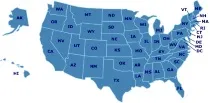
The Western Region Unschoolers is a group for unschoolers who live in the Western U.S. covering: Montana, Wyoming, Colorado, New Mexico, Idaho, Utah, Arizona, Alaska, Washington, Oregon, Nevada, and California. This is a forum to announce and organize conferences, travel, camping, and other places to get together.
Do Christian "natural learners" ("unschoolers") have a world view the same as other Christians? Some of them will, but not all.
Because our public school system has now considerably deteriorated, many parents, teachers, and individuals have taken it upon themselves to create public and private alternatives to that traditional system which is definitely failing. It is important for parents to know that they now have choices, alternatives to the neighborhood school. How do you know that it is time to look for another educational approach for your child? Here are some of the signs.
The Catholic Unschoolers List has been created to provide a forum for those who consider themselves ‘Catholic unschoolers,’ and who wish to make connections with other like-minded individuals for discussion and encouragement.
This discussion list is the companion communications forum for the Unschooling.com website.
What does unschooling look like? Why do people unschool? This seasoned unschooler offers the encouragement to simply give unschooling a try, especially if your homeschooling attempts have proven to be unsuccessful or stressful.
Unschooling is a word coined by negating the idea of schooling; it starts off with a negative definition. What, specifically, is it about schools that unschoolers want to do without?
This documentary follows 10 grown homeschoolers from across the US, as they discuss the impact homeschooling had on their lives. It frankly discusses the successes and challenges that homeschoolers face as they grow from child to adult.
This list is a place for unschooling dads. Whether you're an advocate, long-time unschooler, novice, or somewhere in the middle, you're welcome here. This list is for dads only.
An explanation of natural learning and the reasons for pursuing this in a family.
A homeschooling mom travelled 3500 miles cross-country with her son and found educational experiences in some unexpected places. Drives home the point that learning can happen in many different ways and that we cannot always plan how our children will learn.
This list is a forum for those either radically unschooling or learning how to radically unschool to discuss our "shining" children (Highly Sensitive, Out of Sync, Asperger’s traits, Explosive) and all the issues that accompany life with them--how we grow and learn ourselves thanks to our non-typical children and how unschooling frees their spirits and allows them to truly "shine."
This Learn in Freedom site has been providing free information about learning in freedom and taking responsibility for your own learning. It shows you how to use your own initiative in learning, so you can use schools and teachers just when they are helpful to you, and voluntarily chosen by you. There's information to show you how to get started in learning in freedom and other helpful information.
This list is a place where parents can come to understand and give value to our creative children as we home/unschool with them. The focus will be on discussing alternative ways (versus public school methods) to help our creative children learn which best suits their learning style and respects their complex personality traits, taking a look at creating a success-based learning environment that draws on the strengths of our creative learners while providing support-based opportunities to gently guide their intense natures.
Large traffic email list whose stated purpose is to move out of comfort zones and critically examine beliefs, ideas, and viewpoints about learning, and seek a deeper understanding of unschooling and more respectful relationships with one's children.
A look at using an unschooling approach with children who are highly sensitive and out of sync.
The term "unschooling" was coined by John Holt to mean not sending children to school. The term has been stretched and changed since then, and those of us who refuse the entire school model have taken the word "unschooling" for our own. Other terms associated with unschooling are natural learning, child-led learning, discovery learning, and child-directed learning. We don't divide our day into "school" parts and "non-school" parts, because there are no school parts. We live; we learn; we try new things; we go back to things we've loved a long time.
The Unschoolers' Circle is an inclusive list for anyone interested in home education with unschooling leanings.
Traditional schooling operates on a set of beliefs whose errors have long been exposed. Its teaching is based on outmoded and ineffective concepts of the teaching-learning process. The reason for the failure of the traditional education system is, ironically, that uses "schooling." Children learn, not from schooling, but from living. And for them, living means playing.